


A new Chinese-built AI system called Manus is suddenly a hot topic in Silicon Valley, and not just because it can chat.
Manus is being marketed as an “agentic” AI: software that doesn’t merely answer questions, but can take actions online, filling out forms, moving through websites, generating files, and completing multi-step tasks. Flashy demos and a viral rollout have helped it break through in the U.S. tech conversation, even as critics warn that an AI that can “do” things also creates new risks around data privacy, accountability, and trust.
The buzz lands at a tense moment in the U.S.-China tech rivalry. After the surprise impact of Chinese model-maker DeepSeek, Manus is fueling a fresh debate: is China closing the gap on AI products, or is this more hype than breakthrough?
Manus pitches itself as an autonomous “doer,” not another chatbot
Manus’ backers argue it belongs to a different category than the typical consumer chatbot. The core claim: it can plan and execute tasks on the open web, not just generate text. In practical terms, that means an AI that can operate inside a browser, clicking through workflows, handling office-style tasks, and interacting with web services.
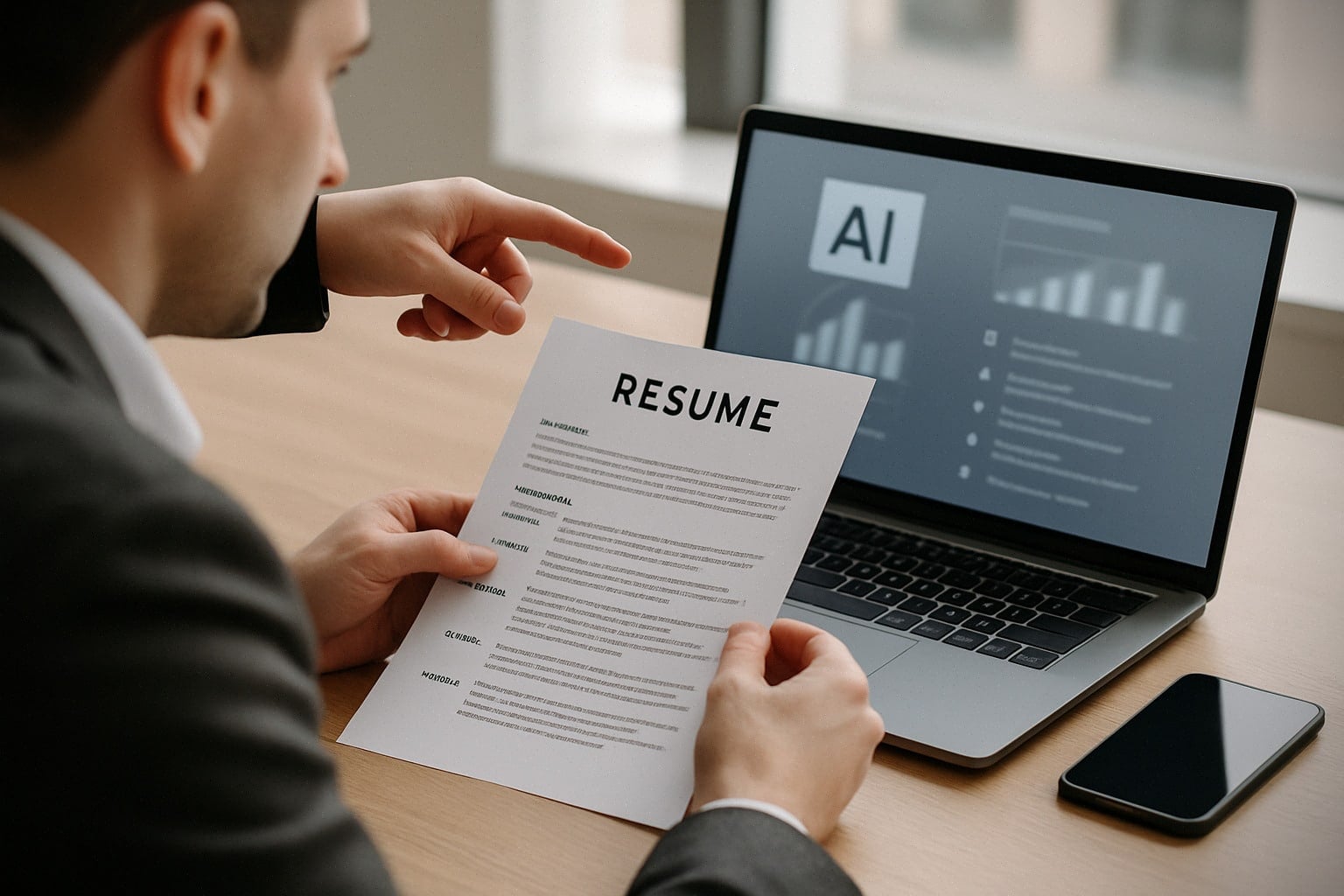
Demos circulated by multiple outlets show Manus chaining together steps to sort job applications, hunt for real estate listings, analyze stock-market data, and produce polished deliverables. The promise is simple: give it a broad instruction, and it breaks the job into sub-tasks, iterates, asks for feedback when needed, and outputs something usable.
Some reports describe Manus running “in the background” across multiple virtual screens at once, collecting information and generating documents in parallel. That multi-step execution, visible in real time, is part of the pitch: it’s meant to counter a common complaint about mainstream AI tools, which can feel like black boxes when they jump from suggestion to decision.
For businesses, the appeal is obvious. An autonomous agent could speed up spreadsheets, slide decks, summaries, and basic web pages. But it also raises a harder question: who’s responsible when the AI makes a costly mistake? If an agent books travel, submits a form, uploads a file, or publishes a mini-site, the failure isn’t just a “hallucinated” sentence, it’s an action with real-world consequences.
That’s one reason Manus is being compared with U.S. leaders like OpenAI and others. But Manus is often described less as a standalone model and more as an orchestration layer, software that can coordinate different AI models and tools to get work done. That detail is also where some of the sharpest skepticism begins.
Manus’ rise isn’t just about technical claims, it’s also about distribution. The startup tied to the project, Monica, has leaned heavily on easy-to-grasp demos designed for social media: “watch this AI finish a real task” moments that spread quickly among developers and tech influencers.
One number repeatedly cited in coverage: more than 138,000 people joined a Discord server linked to the project in just a few days. That kind of surge fits a familiar 2026-era growth strategy, make access feel scarce, run a beta, and let the community generate its own hype through screenshots, tutorials, and rapid-fire feedback.
The scenarios are built to signal productivity: batch CV analysis, chart generation, turning an analysis into an interactive interface, spinning up a shareable website. The implied customer isn’t just consumers, it’s small teams, freelancers, and managers looking for time savings without adding headcount.
But viral demos can distort the conversation. In online chatter, Manus is sometimes framed as another “DeepSeek moment”, a narrative of China versus the U.S., with every slick demo treated like evidence of a major power shift. The reality, as with many hyped launches, is that reliability and scale often lag behind the showpiece.
Multiple sources say Manus remains in beta, a label that matters. The gap between a compelling demo and a dependable product often comes down to compute costs, security hardening, and user support, especially for regulated industries where U.S. companies can’t afford surprises.
Why DeepSeek comparisons are reigniting the U.S.-China AI rivalry
Manus is arriving in the wake of DeepSeek, a Chinese AI player that drew attention for producing competitive models, sometimes at lower cost, and pushing them into the market quickly. DeepSeek and Manus aren’t identical products, but they’re increasingly bundled together in the public narrative: China’s AI ecosystem is moving faster, getting louder, and showing more ambition on the global stage.
The bigger fight isn’t just about whose model scores higher on benchmarks. It’s about who sets the standards for how AI is used at work, what tools become default, what platforms become infrastructure, and what workflows become normal.
An agent that can manipulate web services and generate files could become a layer of software infrastructure, not just an app. And that shifts the competition from raw performance to ecosystems, integrations, developer adoption, and enterprise trust.
In the U.S., the reaction is often filtered through national-security and compliance concerns. If an AI can execute tasks, it may touch logins, internal documents, financial data, and business processes. That moves the rivalry into the realm of governance: who controls the tool, where the data goes, and what rules apply.
At the same time, the playing field remains uneven. U.S. and European tech giants still dominate access to Western enterprise customers and cloud infrastructure. Chinese products can win attention with bold launches and rapid iteration, but they also run into skepticism, regulatory barriers, and heightened scrutiny, especially when sensitive data is involved.
Open-source talk, privacy questions, and reliance on Claude and Qwen
The most sensitive questions around Manus center on transparency, security, and how much of it is truly homegrown. Some presentations suggest an open-source direction, or future openness, which excites developers who want to audit, extend, and build on top of the system. But open sourcing also cuts both ways: it can speed improvements and scrutiny, while also making misuse easier if safeguards aren’t strong.
Another frequently cited point: Manus may rely heavily on existing models, including Claude (from U.S.-based Anthropic) and Qwen (from Chinese tech giant Alibaba), according to reporting in the tech press. In 2026, hybrid stacks are common, many products stitch together multiple models with an orchestration layer. Still, that architecture complicates the idea that Manus represents a fully independent technical leap.
For U.S. companies, the biggest red flag is data privacy. An agent that acts on your behalf may need to read, store, transmit, or reuse information to complete tasks. If users feed it resumes, financial data, or internal documents, the details, logging, retention, cross-border data flows, and third-party access, become make-or-break.
Even if Manus shows its steps, that doesn’t automatically answer the hardest questions: Where does the data go? How long is it kept? Who can access it? Which subcontractors or model providers are involved? Those issues matter more when the AI can click, download, upload, and interact with accounts, actions that can expose sensitive information in seconds.
For Manus, the next few months will likely determine whether it’s a lasting product or a viral moment. The real test won’t be the demos, it’ll be uptime, error rates, clear data policies, and credible governance that convinces businesses the agent can be trusted inside real workflows.

Key Takeaways
- Manus positions itself as an autonomous AI agent capable of carrying out online tasks.
- The startup Monica sped up its rollout through demos and strong traction on Discord.
- Comparisons with DeepSeek heighten the China–U.S. tech rivalry in 2026.
- Privacy concerns and reliance on Claude and Qwen weigh on its credibility.
- Adoption will depend on robustness, transparency, and strong governance safeguards.
Sources
- Manus (agent IA) — Wikipédia
- Manus, la nouvelle IA chinoise qui fait sensation : «Dans la bataille des récits, la Chine marque des points» – Libération
- DeepSeek : qu’est-ce que cette nouvelle IA chinoise qui fait trembler les Etats-Unis ? – Capital.fr
- Manus IA : on vous dit tout sur la nouvelle IA chinoise qui fait sensation
- Manus, la nouvelle IA chinoise qui fait sensation – L'Essentiel de l'Éco

- Comment préparer la mise en place d’un ERP sans perturber son activité ? - 5 octobre 2026
- Protection sociale des professions libérales médicales : le guide complet pour bien s’assurer - 23 septembre 2026
- Abonnement IPTV : le bon plan pour votre facture télé - 23 septembre 2026